Sunday, October 20, 2013

  A "Bit" of Bitumen = A BIG Problem

Ok, so you know what oil is, right?  And you've seen oil spills before.  Total disasters.  They're in the news all the time.  Remember the huge BP oil spill a few years ago?  Remember that they couldn't stop the oil for a long time?  That spill hurt wildlife, harmed the water, and ruined a lot of beaches for a long time.
Just a little reminder:


On June 26, 2010, a different kind of oil leak occurred.  Some people living along Talmadge Creek in Marshall, Michigan were awakened to a sharp smell.  They noticed that the water in the creek was shiny and black.  Turns out oil had been spilling into the creek from a rupture in a nearby oil pipeline since the night before.


A spill of conventional oil would be bad enough, but this case happened to be worse than that.  Because this was a spill of diluted bitumen. What is bitumen?  Well, it's basically a super-thick version of oil.  But it's worse than oil, because it's so thick it can't flow through pipes on its own.  It has to be treated with chemicals to dilute it enough to get it to flow.  Scientists have learned that bitumen can sink in water. This makes it especially hard to remove. 


 Imagine trying to get to the bottom of creeks and rivers to get all of the bitumen out.  


Another bad thing about bitumen?  It contains a lot of bacteria.  
Why are we even talking about bitumen anyway?  Companies never used to mine bitumen.  It was too thick and expensive to remove.  But now, the world is running out of conventional oil that was easy and cheap to extract.  So we're moving on to the difficult and expensive stuff.  

That means we can expect more bitumen spills in the future.  Yea.  

This spill had a huge impact on wildlife.  People tried to save the animals.  They saved 90% of the turtles they found, and 80% of the birds.  Even though they also found a lot of muskrats, none of them survived. 


Surprisingly, no fish were killed.  Scientists think they all swam away.  But before we celebrate, we have no idea if this spill will affect the fish in the future.  Remember that bitumen sinks?  Who knows what's at the bottom of the waterways.


Saturday, October 5, 2013


       Hello, reader! Today, the topic is. . .  galaxies!
       Galaxies are groups of stars, gas, and dust. They are held together by gravity.  There are hundreds of billions of galaxies in the universe.
      A supercluster is a group of galaxies stuffed together.  This is what it looks like:


 http://www.astro.ucla.edu/~ghezgroup/gc/journey/images/gc_color.jpg

There are four different shapes of galaxies:
  • Elliptical galaxies.  They look like flat spheres.

http://cas.sdss.org/dr5/en/proj/basic/galaxies/images/ellipt2.jpg

  • Irregular galaxies.  They have no symmetrical shape and they don't look like any other kinds of galaxies.


 https://blogger.googleusercontent.com/img/b/R29vZ2xl/AVvXsEj7jHWTEzKoxfTWrasQuNN1-5dl6RTb8xC0BoYRugeyJ-RrI8kJYvVfneGmm_n2JPNWxk0uCEub1AUedQPodrFs8qmVDF6aCJCbum8zBudU5mCNJZzJdIJpy9YB8r8OCh42snUvLxKRAnM/s1600/Large+Magellanic+Cloud.jpg

  • Spiral galaxies.  They look like a pinwheel. 


 http://padante.com/wp-content/uploads/2013/01/Galaxy-crash-sparks-large-spiral.jpg
  • Barred spiral galaxies.  They are like spiral galaxies but they have a band of stars across the center.


http://www.newscientist.com/data/images/ns/cms/dn14431/dn14431-1_425.jpg

     Scientists believe that every galaxy has a black hole in the center. For epic info on black holes, visit my earlier post. Black holes are like parasites, eating away at the galaxy they inhabit. Eat, eat, eat. Sometimes, they eat too fast and get indigestion. Kidding. But they do spit out quasars, or pure beams of energy. This is incredibly destructive.
     Galaxies are moving away from each other as a result of left over "big bang" energy.  The center of the universe, where the "big bang" started, is pushing the galaxies out with energy that has still not died out.

      A Doppler shift is when galaxies are pushed away from, or pulled toward, each other.  A redshift is a galaxy that is being pushed away.  The galaxy has a reddish hue because it's heading toward the red end of the electromagnetic spectrum.  A blueshift is a galaxy that is being pulled toward another galaxy.  It has a bluish hue because it's heading toward the blue end of the electromagnetic spectrum.


http://www.astro.cornell.edu/share/sharvari/websiteV7/images/doppler.jpg


Thanks for reading my blog.  See you next time!

Sunday, September 29, 2013

protostar - it's  tiny!
Hello, reader! Today the topic is . . . the Life Cycle of a Star! 
Yes, stars have life cycles, just like anything else.  Stars begin in a stellar nursery.  A stellar nursery is a nebula (a cloud of gas and dust) that houses young stars.  The next phase is a protostar, which is another word for a young star.  After a while, there's so much pressure that hydrogen and helium atoms start smashing into each other.  This creates nuclear fusion, which powers the star.  Nuclear fusion does two things:  it makes ignition and it makes lots of light and heat (otherwise known as energy).
This is a picture of a protostar.

Next, the star enters its mid-life.  This is known as its main sequence, and it is the longest part of a star's life. Our sun is in its main sequence right now.  Our sun is less than halfway through its life cycle.  It will live about 10 billion years. 
At mid-life, a star can be any size.  A star's size depends on how much matter it sucks in. 


red giant - it's huge!
Finally, a star reaches the end of its life.  How a star dies depends on its mass.  If the star is small, it will slowly lose layers and only its core, called a white dwarf, will remain. The lost layers of the star will form a cloud around it.  This is called a planetary nebula.  If the star is big, then it will become a red giant, expanding its outer layers.  See that picture off to the side?  That's a picture of a red giant. 


A star's life is a constant battle between nuclear power and gravity.  But in the end, gravity always wins.  It shoves the layers deep into the core.  But the core has too much pressure and releases a shockwave of nuclear energy called gamma rays.  These powerful energy bursts are also known as super-, or hyper-novas, depending on the star's size. 


Monday, September 23, 2013

Hello, reader! Today the topic is....black holes! A black hole is a very dense region of space.  We're  not exactly sure how black holes are formed but scientists think there are at least two ways:

(1) A large star goes ka-boom (in other words, it dies).  How exactly does a star "die"?  Well, stars need fuel to exist.  They burn fuel constantly.  This burning counters the effect of gravity that's always present.  Eventually, the star runs out of fuel and there's nothing left to counter the force of gravity.  The gravity overwhelms the fuel that is pushing out and it compresses the star.  Sometimes the star simply collapses and sometimes the star implodes.  This forms a black hole.  A supernova is a normal size star the turned into a black hole.  A hypernova is a large star that turned into a black hole.  When a hypernova goes out, the first thing it does is release a gamma-ray burst that can obliterate anything it hits. 

(2) A bunch of matter in the center of the galaxy gets shoved together by gravity (gravity is a bully).  Eventually the matter gets so tight it collapses in on itself.  This forms a black hole.

Black holes are completely invisible.  Nothing can escape once its pulled in (oooh, scary).  They have an edge, though, called an event horizon. If you passed that edge, you'd be spaghettified, (turned into individual atoms, not turned into a tasty snack). 

To understand black holes, you need to know space-time. Our universe is measured in a fabric-like material called space-time.  Our standard measurements, length, width, and height are each a dimension.  But time is another, totally different dimension.  When you combine all four, you get space-time.  Let me show you. See, if you drop a ball onto stretchy fabric, you get a hole,....almost. That is gravity! And mass! But this tiny ball doesn't create a huge black hole. Now, let's imagine using an 8-pound dumbbell. It actually tears space-time like cheap rubber!  This creates a huge black hole in the fabric.  Get it?  Good.


Tuesday, September 10, 2013


The Milky Way galaxy is epic! Wait, what is the Milky Way galaxy?  It sounds delicious!
Hmm...it's a barred spiral galaxy...and it has a bunch of hard-to-pronounce arms...but definitely no milk (or chocolate or caramel.  Booo.)  It's not called the Milky Way because it has some delicious ingredients.  It's called that because it's looks hazy and milky from Earth.
Now for those ridiculously named arms:
The arms are named after the constellations that are seen in those directions.  Ummm, by the way, a constellation is a group of stars that form patterns.  Just so you know.
Let's see . . . the major arms are Cygnus, Perseus, Sagittarius, and Centaurus.
Our solar system is in a minor arm called the Orion spur.  I hate being in a minor arm.  Why not a major arm, huh?
Our arm is almost on the tip, so we can see outside of the Milky Way.
The Milky Way galaxy has a black hole in the center.  It contains gas, dust, and dark matter.
Here is a far out picture (get it?  "Far-out!" Far out, like way out there?  Never mind.)


 Artist impression of the Milky Way.

Thursday, August 29, 2013

Today, you (the reader) are going to have to wait for a bit. I'm sorry, but I simply MUST give the universe a piece of my mind:
Universe? Yeah, I'm sorry, but WHY DID YOU HAVE TO GO AND FLASHBANG WHEN I WASN'T THERE TO SEE IT!?
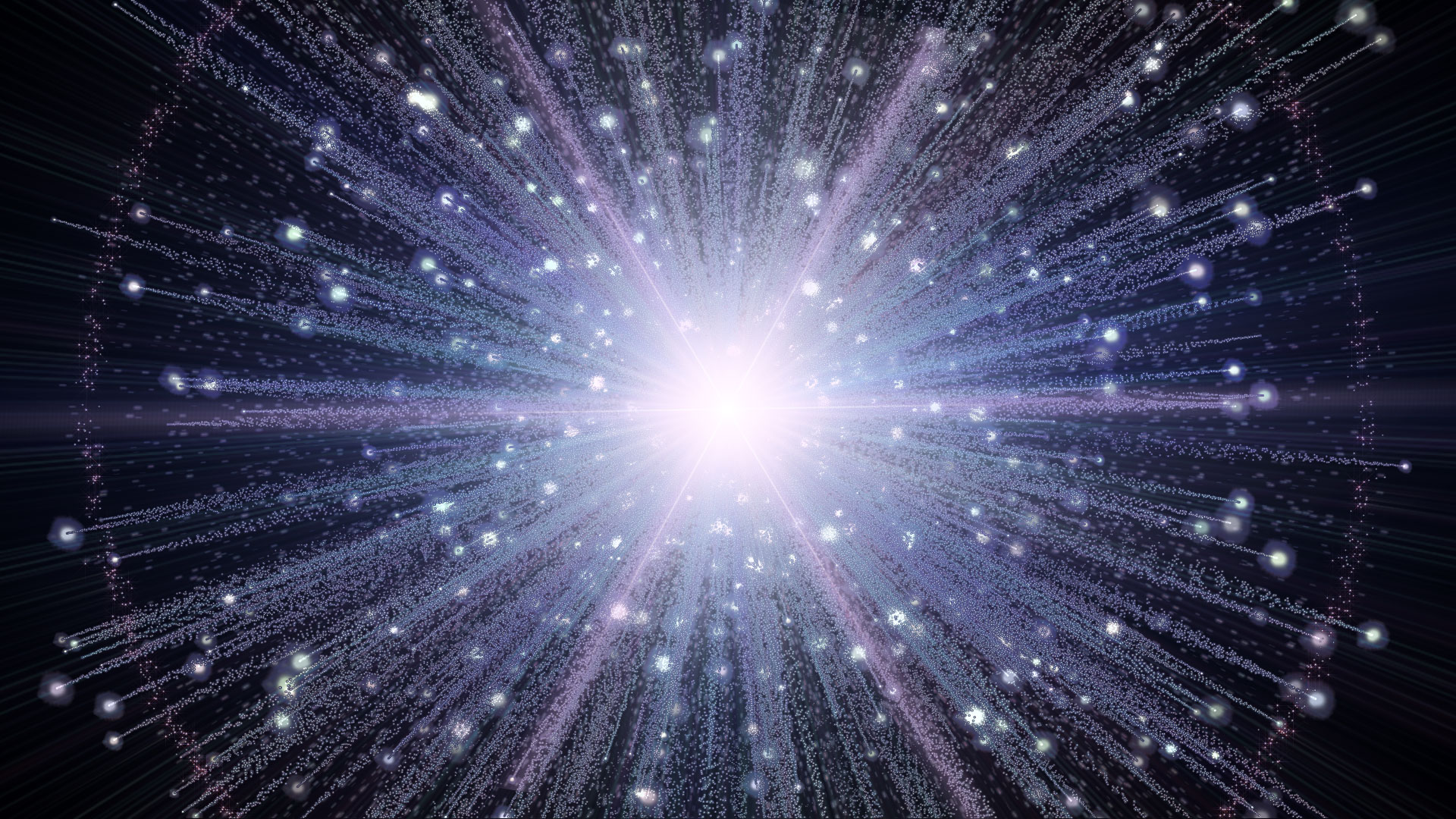
There, back to you, reader! Today I'm going to tell you about the Big Bang, with the help of the Universe itself!  Go ahead, Universe!
Universe: It started 14.5 million years ago.  I remember it like it was yesterday.  I was just a little singularity.
Me:  Yeah, just a little ball that contained all the elements that would make up the universe as we know it.  And it was hot, real hot.  In fact, it was scorching!
Universe:  It was just 10,000 million million million degrees.
Me: True, but we weren't there to feel it!  Good thing!
Universe: The planets-
Me:  STOP CUTTING IN! Sheesh, can I talk at all? 
Universe: Ummm . . . .no.
Me: You know, Universe, if you could have cooled down a bit back then, maybe I could have seen more about space.
Universe:  I did cool down. It just took a while. 
Me:  And good thing you did.  That's when the stars and galaxies began to form.
Universe:  And now I'm as cool as a cucumber.
Me: Yeah, sure. You're still red-hot.  10,000 million million million degrees don't just cool down overnight.
Universe:  I just wish I could finally stop expanding.
Me:  You can't stop expanding or we'll all be crushed.  And then, I'd be really "crushed."  Get it, Universe.  That's funny.
Universe:  Ha.  Ha.   

Thursday, August 22, 2013

The Scientific Method is epic! For those who don't have the faintest idea, it is a method used to work out a problem. For example, a harrowing shock might cause you to wonder why it occured. Here's how. First, you identify the problem-the shock. Next, you form a hypothesis.If I do this again ,will it hurt? Yes, if  you jam your finger in a light socket! Think of a smart way to experiment. Then you experiment-minus the socket. You have to then record your data. If you want to, you can share results. That's all for now. Thank you and goodnight!