Sunday, March 2, 2014

One Last Planet of Epicness
       Hello, this is Jack, and today I'm going to talk about the eighth planet from the sun, otherwise known as Neptune!  Sadly, this is the last planet we're going to study.  Not because we don't like planets or that we're sick of them, but because there are no more planets in our solar system.  Planets, I'm going to miss you. 

     Neptune is the fourth largest planet in our solar system.  Here's a picture: 
Link 1
                                                                  Really epic, huh?
     
     Side note:  Have your parents ever told you that Pluto is the last planet in our solar system?  Well, like in everything else, they're wrong.  Pluto used to be classified as a planet, but that was just a big scientific screw-up.  So, Neptune is our final stop in this amazing solar system.  

     As you know from listening to me drone on about other planets, our celestial relatives are named after Roman gods.  The planet Neptune is named after the Roman god of the sea.  Notice how the planet looks blue, like water?  That's why.  Here's a statue of the Roman god:
                                                                          
Link2 

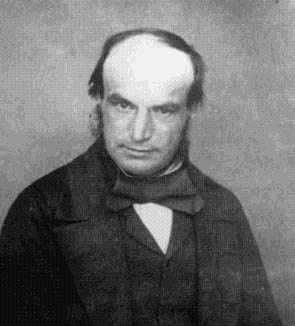
        Well, that's interesting, but it doesn't answer the question we're all just dying to know:  Who discovered the planet Neptune? That accolade officially belongs to a guy named Johann Galle, who discovered the planet in 1846.  Here he is, in all his glory:


     He had a little help, though.  Two men, John Couch Adams and Urbain le Verrier, had predicted that there was something hanging around out there near Uranus. 
     
     John Couch Adams was a math whiz who noticed something was off with Uranus's orbit. He realized that something must have been pulling at the orbit.  His calculations showed that it could be a planet.  Here's the guy's picture:


     I never said astronomers weren't creepy looking. 

     Meanwhile, another astronomer noticed this very same thing.  He was working on his own calculations to try to solve the mystery. He was a Frenchman named Urbain le Verrier. Here's his picture:         
                      
Link 4 

      Slightly less creepy.

      Johann Galle used the calculations of those two creepy geniuses to pinpoint Neptune's exact location.
     
      This blog may be boring enough already, but I'm not done!  It's time for Phase Two of my Epic Neptune Blog!  That's right! I am going to COMPARE and CONTRAST Neptune to the other gas giants!  Hold all applause!

     Here we go.    
     
     All gas giants: 
    (1)  Have no solid surface,
    (2)  have small, rocky cores, and
    (3)  are all totally FREEZING! 

     Neptune:
     (1) Is smaller than the other gas giants,
     (2) has very faint rings thought to be made up of ice and dust particles left over from meteorite collisions, and
     (3) is farther away from the sun.                                     

     Neptune can have some extremely strong winds.  In 1989, scientists discovered a large, oval shaped dark storm on Neptune.  They wanted to name it, and all they could come up with was the "Great Dark Spot."  This storm was large enough to contain the entire Earth and spun in a counter-clockwise direction.  It should have been called the "Windy Dark Spot," though, because the winds were soaring at about 750 mph, or about Mach 2.   It appears that this storm is over, though, because scientists can't find it any more.  Here's a picture:


      That great dark spot in the center is the "Great Dark Spot."

     That same year, there was also another, smaller storm discovered that they named, um, the "Small Dark Spot."  This one has about the same windspeeds, but is smaller. Here's a picture:


     Well, I guess 1989 was the year for the discovery of storms on Neptune because there's one more storm to go. It's a small storm, or cloud pattern, that moves very fast around the planet. Scientists really put their heads together this time, and named the storm "Scooter."


     This is the same picture as above, but see the white mark right below the "Great Dark Spot"?  That's Scooter.

     Neptune, sadly, doesn't have any snow days. Or rain days or sun days, in fact.  It can't, because there's no oxygen in the atmosphere and water is made up of both hydrogen and oxygen.  That's why some geeks call water H2O.   But if you wanted a frozen methane day, than you should head to Neptune. Every day's a frozen methane day there. 

     I still need to tell you about Neptune's moons.  Although it feels like it's been many moons since I started this blog, that's beside the point.  Neptune has 13 confirmed moons and one more awaiting official confirmation.  The fourteenth moon, if it really is a moon, was only just discovered. 

     One official moon, though, is epic because it houses "geysers," or "ice volcanoes." The moon is named Triton, and it has "geysers" that spew out a combination of liquid nitrogen, methane, and dust.  This stuff instantly freezes and then snows back down to the surface.  Here's a picture of Triton:


     Here are some interesting facts about Neptune, "interesting" being a relative term.  Actually, this whole blog includes interesting facts about Neptune, but here are a few more:

     (1)  Neptune has only a 16-hour day.  That's how long one rotation takes.
     (2)  It takes 60,190 Earth days for Neptune to make a complete orbit around the sun.  For you math-challenged people, that's 165 Earth years.
     (3)  Neptune has six rings.
     (4)  Neptune cannot support life as we know it.  (Have you ever wondered what life as we don't know it means?)
     (5) Galle wanted to name the planet after Le Verrier, but scientists don't like change.  He had to keep with the Roman god theme.

Bye, bye planets.  It was great getting to know you.

 
Information Links
 Link 2

                                                                       Picture Links
                                                                             Link 1
                                                                             Link 2 
                                                                             Link 3
                                                                             Link 4 
                            Link 5                          
 Link 6
                                     Link 7                                    


Sunday, February 9, 2014

Lucky Number Seven


     Hello, this is Jack at My Epic(er) Blog!
     
     Today I'm going to talk about . . . drumroll please . . . URANUS!  This name may make you laugh, but this planet is seriously epic.  It's pronounced YUR-uh-nus, by the way.  I like this planet because it's the seventh planet from the sun.  Here's a picture:


     Isn't it awesome?
     
     This epic planet was discovered by English astronomer William Herschel in 1781.  He originally thought it was a comet or a star.  It's named after Uranus, the Greek god of the sky.  Here's a picture of a sculpture of the dude:


     Most people associate planetary rings with the planet Saturn, but did you know that Uranus has rings, too?  It's true.  Uranus has two sets of rings:  an inner system of eleven narrow, dark rings, and an outer system of two brightly-colored outer rings.  Scientists have named each of these rings, but I don't want to bore you to death by listing them here.  Here's a picture of the rings:


     That's a cool picture. Here are some others:


      Uranus has lots of moons.  Twenty-seven, to be exact.  They're named after characters from things written by William Shakespeare and Alexander Pope.  But who cares about the names.  Uranus's strangest looking moon is the one named Miranda.  Miranda is unique because it has a surface that's very different from any others that scientists have seen.  It has canyons 12 times deeper than the Grand Canyon.  Parts of Miranda's surface look very old, and parts look very new. 

     Here's a picture of the moon Miranda:


      Do you think it's weird-looking?  Here's a picture of Miranda, with a few other moons, surrounding Uranus:


      Uranus is one of two ice giants in the solar system.  (Here's a hint at the other one:  it's Neptune).  Eighty percent of its mass is contained in a liquid core consisting mostly of ice.  It's atmosphere is mostly hydrogen and helium, with a small amount of methane and very small amounts of water and ammonia.  It's the methane in the atmosphere that gives Uranus its blue-green color.
                                                    
      
     Uranus doesn't even have a solid surface.  It's atmosphere is actually its surface!  If you wanted to land there, you couldn't:  you'd have to hover.  Crazy, huh? 
     
     Another thing that's different about Uranus is its rotation.  Uranus rotates from east to west.  Its rotation axis is tilted, so it looks like it's rotating on its side.  Scientists think that maybe Uranus had a collision with another planet that caused it to tip sideways.  Uranus says, "You should see what happened to the other planet."  

      I've already listed so many interesting facts about Uranus, but here are a few more:
       1.  One Uranus year is equal to 84 Earth years;
       2.  One day on Uranus takes about 17 hours;
       3.  Uranus cannot support life, as least as we know it;
       4.  Only one spacecraft, the Voyager 2, has ever visited Uranus;
       5.  The half of Uranus that does not have the sun shining on it is cold for 20 years!

That's the end of my epic blog.  See you on the next planet (here's a hint:  the next planet is Neptune).


Information Links


Picture Links

Saturday, February 1, 2014

Super Me!  (And Super You, As Well)

     Have you ever watched a movie about this guy . . .


and wished you, too, could fly and have super-strength? 


     Well, guess what?  You can!  Sort of.  You still can't fly, but now you can have super-strength!


     How can this be?  Four smart geeks, I mean four smart students from the University of Pennsylvania have invented a device that can give you an instant boost of strength!  It's called Titan Arm.  Here's what it looks like:


     The Titan Arm is a robotic device that you simply put on over your existing right arm.  It goes across your shoulders and back.  It lets you lift an extra 40 pounds more than you could before without any extra strain on your body!  

     Not sure what this guy is trying to do with the Titan Arm . . .


      but imagine what you could do if you could easily lift heavy objects.  

     You could lift up your grandma . . . 


       . . . your friends . . . .


      . . . or even a big rock. 


     The Titan Arm weighs 18 pounds and is controlled with a handheld joystick.  It can also measure your range of motion and track your strength.

     So, besides those of us who want to be superheroes, who could use this device?  The Titan Arm can help lots of regular people too: people who have been injured, people with diseases like arthritis, and even people who have to lift heavy things for a living, like movers, and delivery men and women.  


     Since the Titan Arm is so epic, do you think it must be expensive?  Well, it is.  It goes for about $2,000.  But that's not a lot compared to similar devices that sell for around $10,000.  

     So before you save the world, start by saving your allowance.  

     Thanks for reading my blog.


Information Links

Picture Links

Monday, January 20, 2014

SATURN AND ITS OVERALL EPICNESS

     This is Jack, and today I will tell you about my favorite planet in the solar system . . . Saturn!  
    
    Words don't do justice when it comes to describing the planet Saturn, so let me just start off with this awesome sight:


     There are many photos of Saturn, but this one is amazing, don't you think?  It was taken from the Voyager space craft.

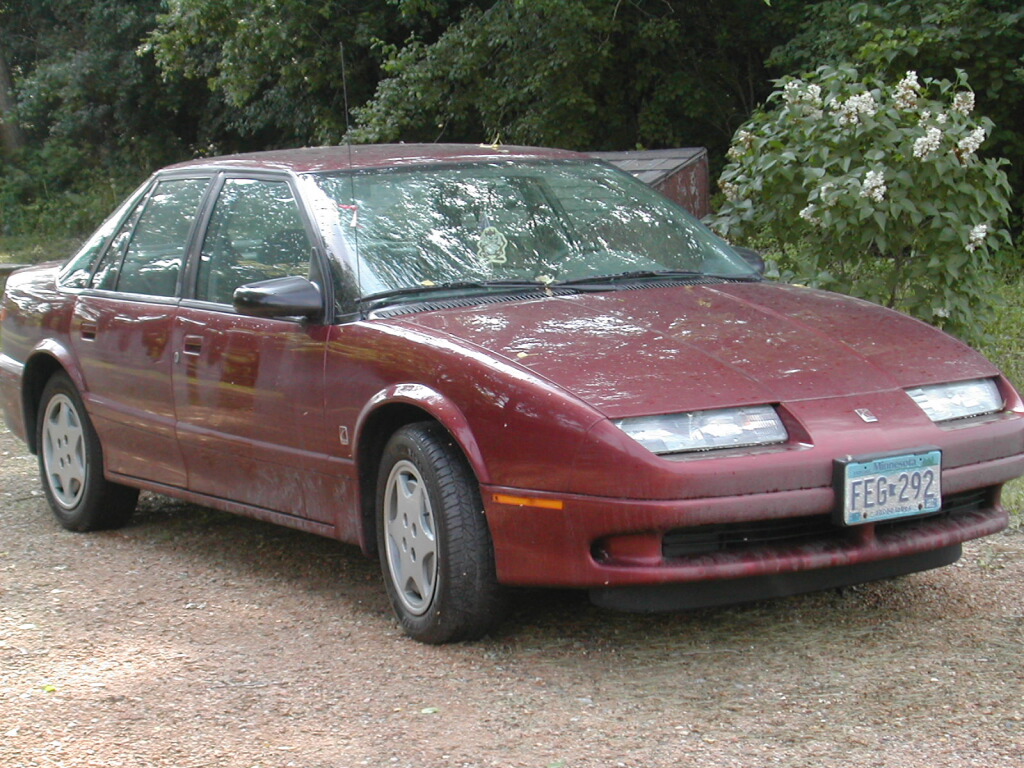
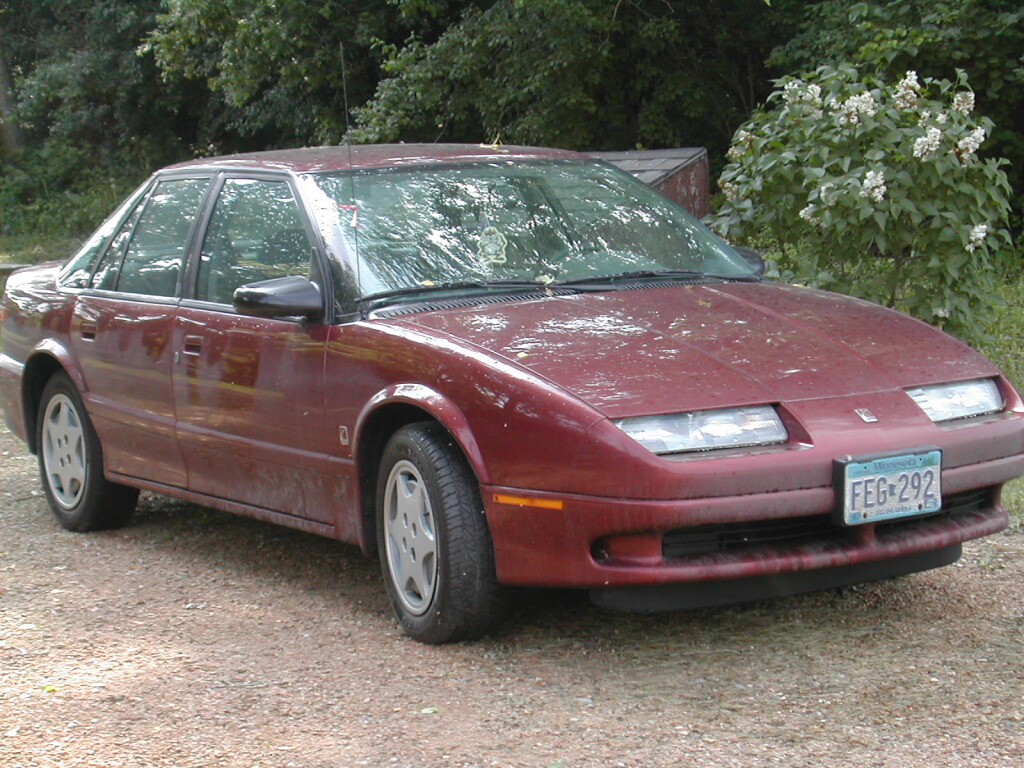
     This is a picture of a Saturn that is not so amazing:


     "Saturn" is also the name of the make of an American car manufacturer.  It doesn't really do the planet Saturn any justice, does it?

    Sorry to any Saturn owners.

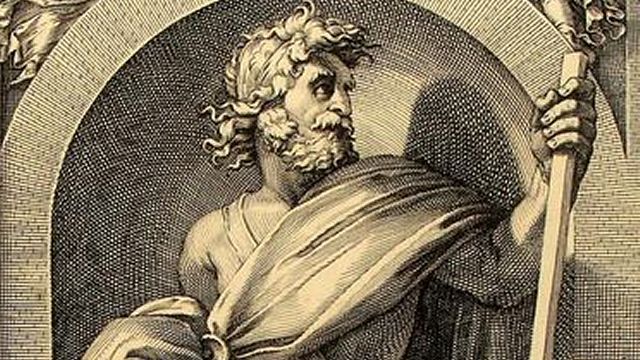
    Anyway, the planet Saturn was named after the Roman god of agriculture.  Wouldn't it be nice to have a planet named after you? 
     
     Pictures of these Roman gods tend to all look alike, but here's one that is supposed to be Saturn:


      The Greek version of Saturn is Cronos, the father of Zeus.  He got chopped up and sent to Tartarus.  Here's an artist's rendition:


     So . . . Saturn is the farthest planet from Earth that can be seen by the human eye.  It's the sixth planet from the sun and the second largest in the solar system, (Jupiter is the largest, remember?)  Here's a little reminder:


     See the one with the rings?  That's Saturn.  More about the rings later.

     Saturn is a huge planet.  It's volume is 755 times greater than Earth!  But Saturn is a gas giant planet, made mostly of hydrogen and helium.  Since it's made up mostly of gasses, it's not very dense.  Since this is about to get complicated, I'm going to turn this over to Professor MC Squared.  Take it Professor:


     "Density is a measure of mass per volume.  Saturn is not very dense because it's particles are mostly made up of gasses.  An easy way to think about it is that Saturn is very light for it's size.  So, even though Saturn is very big, it's mostly made up of gasses so it's not very heavy.
     High density planets are very heavy for their size, and low-density planets are very light for their size."


     Thank you Professor MC Squared.  
     
     Saturn's density is even lower than water.  That means the planet would float if it were placed in water!

    Saturn's atmosphere is like the rest of the planet.  It's made up of about 75% hydrogen and about 25% helium.  It has very small amounts of other things, like water and methane. 

     One of the reasons Saturn is my favorite planet is because it's surrounded by rings.  You always know Saturn when you see it because of it's horizontal rings.  The rings are mostly made up of water ice, and have ringlets, "braided" rings, and "spokes," which are dark features in the rings.  The rings also contain rocks, dust, and other chemicals.

     Here is a natural-color view of Saturn's rings:


          This is a highly enhanced color view of the rings:


      Saturn's ring system extends hundreds of thousands of kilometers from the planet, yet they're only about 30 feet in vertical height.


      Saturn is surrounded by 53 moons.  One of the moons is named Titan.  Here's a picture:


     The big moon is Titan, and the little one in the back is another one of Saturn's moons called Tethys.

      Next, I'm supposed to list some interesting facts about Titan.  I'm giving this one to the Professor.  Take it away, Professor MC Squared:


   "Thank you, Jack.  Here are eight VERY interesting things about Titan:
     1.  Titan is bigger than the planet Mercury.
     2.  It's the second-largest moon in the solar system.
     3.  Its atmosphere might be similar to what Earth's was like long ago.
     4.  The surface temperature is -289 degrees F.
     5.  It takes 16 days for a full orbit.
     6.  Titan is the only moon to have clouds and a planet-like atmosphere.
     7.  It was discovered on March 25, 1655 by a Dutch astronomer.
                                                          8.  The name "Titan" comes from a generic term from Roman mythology for the children of Ouranos and Gaia.  Titans are the ancestors of humans."

     Thank you, Professor MC Squared.  

     Thanks for reading my blog.


Information Links

Photo Links

Sunday, December 15, 2013

JUPITER:  "EPIC-NESS" IN A PLANET FORM
Hey, this is Jack at my epic blog! I am going to talk about ...well, come on!  What's the title?  Anyway, time for the "epic-ness" to start. 
 
The planet Jupiter is named after the Roman god Jupiter, who was the king of the Roman gods:


It makes sense to name the planet after the king of the gods because Jupiter is the largest planet in our solar system.  It's truly massive.  More than 1,000 Earths could fit inside Jupiter!  Here's a visual.  The big planet is Jupiter, and the tiny blue planet next to it is Earth:


This massive size is the reason the gravity on Jupiter is the strongest in our entire solar system.  The gravity on Jupiter is about 2.5 times what it is on Earth.

Jupiter is the fifth planet from the sun. 


Here's a picture of Jupiter.  This picture is epic because it's actually a true color picture of Jupiter:


Jupiter is a gas-giant planet.  It doesn't have a solid surface.  Gas-giant planets are called "Jovian" planets (Jupiter-like).  There are four of them:  Jupiter, Saturn, Uranus, and Neptune.  The inner planets are not gas-giants.; they're called "terrestrial" planets.  They're mostly solid, and they include Mercury, Venus, Earth, and Mars.

Scientists think that Jupiter has an inner, solid core that is about the size of the Earth.

Jupiter's atmosphere is made up mostly of hydrogen and helium. 

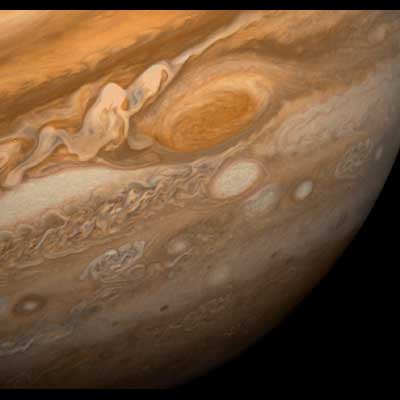
Jupiter has a giant red spot on it, called the "Great Red Spot," or "The Eye of Jupiter."  Here it is: 


This "spot" is not a spot at all.  It's actually a humongous storm.  I mean really humongous.  The storm itself is about the size of two or three Earths!  This storm has been going on for hundreds of years!

Jupiter has many, many moons.  Fifty moons are known.  There are 17 more moons that are waiting to be confirmed as actual moons.  For those of you who hate addition, that's a total of 67 moons!


One of Jupiter's moons is called Europa.  Here's a truly epic pic:


Europa is an icy moon.  The surface contains many cracks in the ice.  It's a little bit smaller than the Earth's moon.  Scientists think that Europa has some qualities that are similar to Earth:  an iron core, a rocky mantle, and a surface ocean of salty water.  Can you believe that?  The problem is, this ocean is so deep that it covers the entire surface of Europa.  Because Europa is so far from the sun, the surface of the ocean is basically frozen over. 

The ocean may not be frozen solid, however.  Recently, the Hubble telescope captured a picture of a puff of water vapor that was spouting about 125 miles above the surface of Europa.  Here's an artist's interpretation of what it looked like:


Even though it's frozen on the surface, the water spout supports the theory that the water underneath may not be completely frozen.  This is because the friction created by Jupiter's gravitational pull on Europa generates some heat.  It's water may have the right chemistry to sustain some very basic aquatic life.


Five interesting facts about Jupiter:
(1) If you think about the sun as being the size of a regular front door, in comparison, the Earth would be the size of a nickel, and Jupiter would be the size of a basketball!
(2)  Many space missions have gone to Jupiter.  There's another one scheduled to take place in 2016.  It's called the Juno mission, named after the Juno probe.  Here's a pic:


(3) Another word for Jupiter is "Jove."  That's why scientists refer to things about Jupiter as "Jovian." 
(4)  It takes Jupiter only 10 hours to rotate on its axis, compared to 24 for Earth.
(5)  A year on Jupiter lasts 4,333 days, or about 12 Earth-years!


That's all about Jupiter.  Thanks for reading my blog.

Content Links

Picture Links

Sunday, December 8, 2013

The Second Class Citizens of the Solar System

Hi, this is Jack at my epic blog! Breaking news: there are other things besides planets in the Solar System!  These other things may not get all the glory, but they're worth talking about.  If only because that's our assignment for this week.  Let's address these second-rate space inhabitants one by one.

Comets
Comets may not be the "stars" of the universe (get it?), but they are extremely rare objects in space.  They come from either the Kuiper Belt or the Oort Cloud, which are large groups of asteroids.  They can be in either of those places for billions of years!  Until, one sad day, they crash into the wrong comet.  The crash sends them shooting in the direction of our Inner Solar System.  That's where we meet them.  And that's where they will ultimately MEET THEIR END!

Physically, they're like the snowballs of the universe.  They are frozen balls made up of rock, ice, dust, methane, and ammonia.  Ever wonder what they look like?  Here's a pic:


Epic, huh?
Comets have four parts: a nucleus, (the solid part), a coma, (no, it's not asleep, it means the aura around it), a dust tail, and a ion (gas) tail.
Here's a diagram of the parts of the comet.  Get ready for a snooze fest:


Just kidding, diagrams are epic!  Back to comets.
A comet can spend billions of years in the Kuiper Belt or the Oort Cloud, but once they get close to the sun, it's the beginning of the end.  The comets begin to melt.  That's where the brilliant tails come from.  After a few thousand years, they're reduced to nothing more than a little ice and dust. 

Betcha didn't know this:  Scientists consider comets to be small worlds, and sometimes call them planetesimals.
Well, that's a comet. 

Asteroids
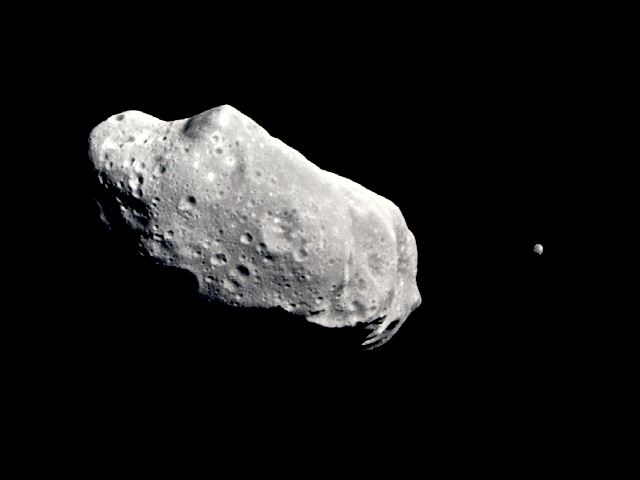
Asteroids and comets have a few things in common.  They're both considered leftovers from the giant cloud of gas and dust that ultimately formed the universe billions of years ago.  An asteroid is a lump of . . . rock. Plain, old rock. They always have north and south poles. Just like Earth!  As I have already brilliantly stated above, a comet is a chunk of rock too, but it also contains ice, dust and gases.  Here's a picture on an asteroid:


Another difference between asteroids and comets:  asteroids orbit the sun in an asteroid belt that runs between Mars and Jupiter, while comets orbit from way further away.

Betcha didn't know this:  Although it's sometimes hard to tell if you're looking at an asteroid or a comet, a comet appears "fuzzy" when viewed through a telescope.

Meteoroids, Meteorites,  and Meteors

Ok, so what's the difference between meteorites, meteors, and meteoroids?  Everything starts with meteoroids:
  • Meteoroids are little chunks of rocks and debris from space.
  • Meteoroids become meteors (aka shooting stars) when they interact with a planet's atmosphere and cause a streak of light in the sky.
  • Debris from meteoroids that make it to the surface of a planet are called meteorites.
Got it? Good.

This is what a meteor looks like:
 

It's hard to get a good picture of a meteoroid because we usually see them after they become meteors.

Meteorites can be as small as a grain or as large as a boulder.  Most meteorites are either iron, stony, or stony-iron.  Cool, huh?


Meteor showers are associated with comets.  Comets often leave a dusty trail when they come around the sun.  The Earth passes through these dusty comet trails.  This allows debris to enter the Earth's atmosphere, where it burns up.  The burning up of the debris creates fiery and colorful streaks (which are the meteors) in the sky:


Meteoroids, meteors, and meteorites cannot support life.  But betcha didn't know this:  they may have provided the Earth with amino acids, which are the building blocks of life!

Comets, asteroids and meteorites give us clues to the origins of the Universe.  Have they told us everything there is to know?  We don't know! So . . .  even though they are the "second class citizens" of the Solar System, and even though they are very, very old, I think that scientists should continue to study them.  Who knows what discoveries are on the horizon.

Thanks for reading my blog.


Content Links


Picture Links

Sunday, December 1, 2013


 DIE, VEGETABLES, DIE!!

KIDS HATE VEGETABLES.  Overstatement?  Ok, I'll modify that a little.  MOST kids hate MOST vegetables.  There, better? 


Parents are always pushing kids to eat vegetables.  WHY, oh why do they load up our plates with this nasty stuff?  Unfortunately, there are many good reasons.  I hate to admit any of them, but here are two:

(1)  Vegetables are very HEALTHY.  This is just one of many, many articles listing the health benefits of vegetables:
http://www.choosemyplate.gov/food-groups/vegetables-why.html

(2)  Adults have fewer taste buds than kids, so they can't tell (and they apparently do not remember) how vile most vegetables taste.  Kids suffer much more when we eat vegetables than adults do:
http://everydaylife.globalpost.com/difference-between-taste-buds-adults-kids-27362.html

Some inventor guy in Japan named Dr. Takayuki Kosaka thinks he can get kids to eat vegetables.  He works at the Kanagawa Institute for Technology in Tokyo, Japan. Here's what the dude looks like.  Check out how happy he is.


Dr. Kosaka has invented a sensory video game called Food Practice Shooter.  It requires the player to move through a city looking for "bad guys." Sounds like a million other video games, right?  Well, with this one, the "bad guys" are giant . . . VEGETABLES. Yes. Vegetables. They're trying to take over the city.  Seriously.  Here's a view of the game.  Sooooo . . .  here come the GIANT . . . carrots? And, uh, peppers!  And, oh my, tomatoes!  LOOK OUT!!  FIERCE VEGETABLES ON THE LOOSE!!


The object of the game is to shoot down the invading giant vegetables.  You shoot them down with more, umm, vegetables. So, how does this thing get kids to actually EAT vegetables?  The game includes three scales which must be loaded up with actual vegetables in order for the game to work.  You have to wear headphones that contain sensors.  Every time you fire, your ammunition is depleted.  There's only one way to get more ammo.  You must chew your vegetables AND - get this - SMILE while you're doing it!  The headphones can sense a chewing motion! You must smile at a camera on the controller while chewing!  Or else, no more ammo.  Game over. Wanh wah.


So it seems kind of stupid and it pretty much is. The only cool thing that I can see is the controller.  It looks like a rocket launcher (check out happy guy above again . . . he's holding the controller).

I think this game would be better if kids got to shoot junk food with vegetables.  Shooting vegetables with vegetables doesn't make any sense.
 
Well that's it.  I wouldn't play this game.  Would you?

Thanks for reading my blog.

Information Links

Picture Links